Still another lot of Fentanyl Pain Patches has now been recalled. On October 21, Actavis, Inc (famous for its manufacturing defect of Digitek) recalled (but only to the wholesale level and the retail level) eighteen (18) lots of its Fentanyl Transdermal System 25 mcg/hour C-11 patches. Corium International (in the U.S.) was the company that manufactured the patches for Actavis. At least one lot (Control/Lot # 30349) was admitted to have at least one patch which released its active ingredient faster than the approved specification. That lot made it to market. Actavis, however, recalled 18 lots.
The long-awaited trial for the children of Kiddie Kollege is finally here. Partner, Jim Pettit, is the court-appointed Lead Counsel for plaintiffs, who are members of a class of the children (and their parents and faculty) who attended Kiddie Kollege Daycare in Franklin Township, Gloucester County, New Jersey. The daycare was in a building formerly a thermometer factory, and it was heavily contaminated (sometimes 40 times, or more, than the federal standard) with mercury. Mercury can become vapor even at room temperature and this metal, when inhaled, enters the brain and the central nervous system. Mr. Pettit and his co-counsel seek medical monitoring for the class members. That is, they seek to have the defendants financially support a court-supervised fund for testing of the central nervous system and the immune system. The trial will be a bench trial (not a jury trial) conducted before the Honorable James Rafferty, in Woodbury.
The defendants moved for summary judgment on numerous issues. The government defendants (the State of New Jersey, the County of Gloucester, and the Township of Franklin) argued that they were not liable factually and in any event they could not be held liable because as government entities they could not be sued under the Tort Claims Act. The other defendants argued that they were not liable as a matter of law. Defendants also moved to preclude each and every one of plaintiffs’ experts from testifying. Finally, they moved to de-certify the class actions. The judge denied the motions and ruled that the case is proceeding to trial. The defendants then moved for a stay in order to appeal which was denied.
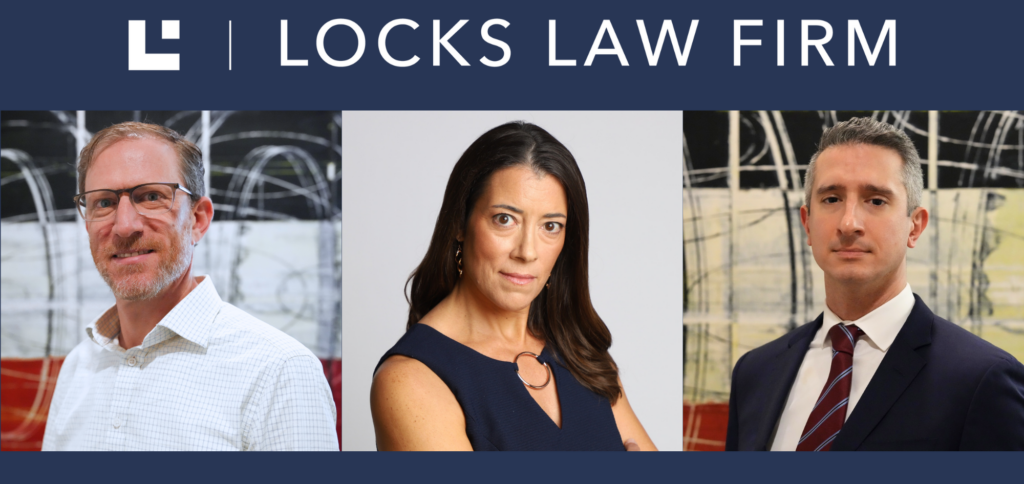
On September 15, 2010, the United States District Court for the Northern District of New York granted conditional certification in a Fair Labor Standards Act action brought by Locks Law Firm against Alcoa, Inc. on behalf of certain present and former employees of Alcoa’s Massena West plant in Massena, New York.
The Court also appointed Andrew P. Bell, a partner of Locks Law Firm and lead counsel in this action, as a Collective Action Counsel. On September 23, 2010 and as authorized and directed by the Court, Locks Law Firm mailed out Notices and Consents to the 263 present and former employees of Alcoa’s Massena West facility affected by this action.
If you are or were an Alcoa hourly employee and you perform or performed work involving molten metal processing in the ingot and/or pot room departments at the Massena West facility at any time since September 15, 2007, you are eligible to file a consent to join this action. If your consent form has been lost or misplaced, you can get a copy of the Notice and Consent by clicking on the here:
Alcoa Collective Action Notice
To take part, you must sign and send the a Consent Form to the lawyers listed below, or you may seek to retain counsel of your own choosing.
US and European regulators, in a highly unusual coordinated move have determined a course of action concerning Glaxo-Smith Kline’s diabetes drug Avandia, which was shown to be associated with an increased risk of heart attacks and stroke after Dr. Steven Nissen of the Cleveland Clinic performed an independent analysis of GSK’s own studies. European authorities will suspend the use of the drug and the FDA will severely restrict the use of the medication in the United States.
The New York Times reports today that the embattled diabetes drug will only be available to patients and their doctors in the US who attest that the drug is the last line of defense—that all other diabetes drugs have been tried in a patient without satisfactory results. Additionally, both patients and doctors will have to assert that the patient has been warned about the possible life-threatening side effects of Avandia.
GSK has been under fire for years as a result of its aggressive Avandia marketing efforts. After internal company documents were made public that revealed GSK’s efforts to hid negative test results, and a legal settlement which forced GSK to post drug study information on a website, Dr. Steven Nissen form the Cleveland Clinic performed an independent study that highlighted the cardiac dangers of the drug. FDA’s decision here highlights a new government tack that indicates Big Pharma may be under greater scrutiny in the coming years.
There have been five verdicts (four in New Jersey) in the Accutane litigation in plaintiffs’ favor, totaling $55 million. A couple of verdicts have, unfortunately, been reversed and sent back for a second trial. Most of the almost 1,000 cases are in New Jersey where manufacturer, Hoffman-LaRoche, is headquartered. (more…)
The Avandia news continues. Just last month, there was a meeting of a joint advisory committee reporting to the Food and Drug Administration (FDA) concerning the potential health risks of the diabetes drug Avandia. This was the second meeting of this committee. It originally met in July of 2007 and reported that Avandia was associated with an increased risk of heart attacks. Three years have now passed, and the committee has met again, and this time, although 12 members of the committee voted to withdraw Avandia from the marketplace, 21 members voted that it remain available for sale and use. (more…)
The hits just keep coming for drug giant J&J who recently issued recalls for some its most popular and profitable products like Children’s Tylenol, and just last week, its Acuvue contact lenses had to be pulled from the Asian and European markets. Yesterday, J&J’s DePuy Orthopedic division recalled the ASR XL Acetabular System, a hip socket used in traditional hip replacement, and the ASR Hip Resurfacing System, a partial hip replacement that involves placing a metal cap on the ball of the femur, a method intended to preserve more bone. (more…)
Further to my June 24 blog and as reported in the The Boston Globe, Harvard Medical School has joined the ranks of medical educational facilities that have enacted new, tough conflict-of –interest rules affecting the payment of educators and others by Big Pharma and Medical Device manufacturers. (more…)
The good news keeps coming for Glaxo, the pharma giant that makes the diabetes drug Avandia. Yesterday the FDA ordered Glaxo to stop patient enrollment in a study that compared Avandia to a competing drug Actos, and to warn all patients already enrolled that Avandia may increase the risk of heart attacks.
Dr. Steven Nissen, whose 2007 study sounded the alarm about Avandia, was quoted in the New York Times today as saying he believed that the Panel’s findings about Avandia would eventually lead to suspension and abandonment of the study altogether. Nissen noted: “There was really no other action they [FDA] could take. Now the challenge is, if that trial is unethical, how can Avandia stay on the market?”
Stay tuned.
(more…)
As a follow-up to my blog post of July 16, 1010, the Wall Street Journal today reports that an FDA panelist who voted to leave Glaxo’s diabetes drug Avandia on the US market with no additional restrictions received—wait for it folks—money from the drug maker for being a member of its “speakers bureau.” Philadelphia based endocrinologist David Capuzzi, M.D. told the WSJ that since he never gave talks “promoting” Avandia, he didn’t see any conflict of interest. Dr. Capuzzi was only one of three members of the 33 member panel who voted to leave Avandia on the market without further restrictions. (more…)